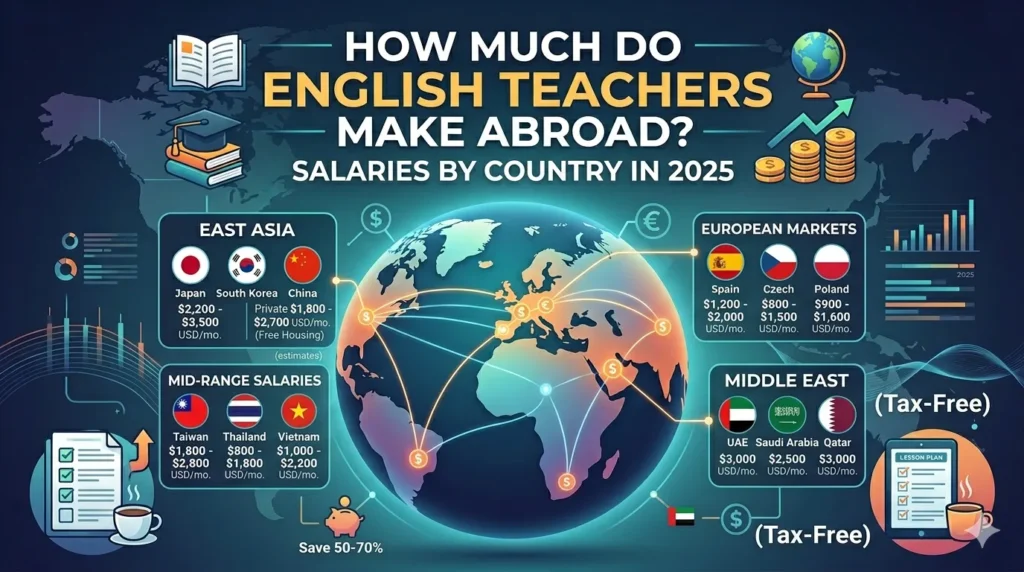
English teacher salary abroad is one of the first things people want to understand before moving overseas.Understanding English teacher salary abroad is one of the main reasons people consider teaching overseas. Teaching English abroad gives you the chance to explore new cultures, build international experience, and earn a living while doing it. But before you book a flight, one question takes over: how much will you actually make?
Table of Contents
The honest answer is that it depends enormously on where you go. Some countries will barely cover your rent. Others let you save thousands while living comfortably. The gap between destinations is wider than most people expect.
Here’s a detailed look at English teacher salaries across the world’s most popular teaching destinations including cost of living, benefits, and what your money actually gets you on the ground.
Understanding English Teacher Salary Abroad
Salary figures alone don’t tell the full story. Most teaching positions abroad fall into one of three categories, and the structure matters as much as the number.
Public school programs tend to offer lower base salaries but make up for it with benefits, housing allowances, health insurance, and flights home. These government-sponsored roles prioritize cultural exchange, not high earnings.
Private language schools usually pay higher hourly rates with more flexibility, but fewer benefits. In many cases, salaries vary significantly depending on country regulations and demand (for example, programs like EPIK in Korea set structured national standards for pay and benefits).
International schools offer the strongest salaries and the most complete benefits packages, but they typically require formal teaching qualifications beyond a TEFL certificate.
The takeaway: a $30,000 salary with free housing and covered flights can leave you better off financially than a $50,000 salary with nothing included. Always look at the full package.
High-Paying Destinations
United Arab Emirates
Average Salary Range: $3,000 – $5,500 USD/month (tax-free)
When looking at English teacher salary abroad, The UAE is consistently one of the best-paying countries for English teachers. Many roles are offered through international school systems such as GEMS Education. Dubai and Abu Dhabi lead the way, with many positions including housing allowances, health insurance, and an annual flight home. Experienced teachers at international schools can earn up to $6,500 monthly, while private language centers typically fall in the $2,500–$4,000 range.
The tax-free status is a significant advantage. What you earn is what you keep. Most positions require a bachelor’s degree and TEFL certification, though international schools generally want a full teaching license. Dubai is the most expensive emirate to live in, but salaries reflect that.
South Korea
Average Salary Range: $1,800 – $2,700 USD/month
South Korea has long been one of the most popular destinations for first-time teachers, largely because of EPIK (English Program in Korea). The standard package covers salary, free housing, health insurance, and a flight reimbursement which removes a lot of the financial risk of moving abroad.
EPIK public school salaries run 2.1–2.7 million KRW monthly (roughly $1,600–$2,050). Private hagwons can pay more but come with less stability. University positions offer the best work-life balance, with salaries reaching around $3,000 monthly.
With free housing and a relatively low cost of living, most teachers save $800–$1,200 per month without much effort.
Japan
Average Salary Range: $2,200 – $3,500 USD/month
Japan offers a range of teaching paths from the well-known JET Programme to private conversation schools (eikaiwas) and international schools. JET provides stable government placements with solid benefits and cultural support, paying around 3.36 million yen annually (about $2,300/month). Rural placements sometimes include housing subsidies.
Private eikaiwas like NOVA and Berlitz typically pay 250,000–300,000 yen monthly ($1,700–$2,050) with fewer perks. International schools and universities can reach $4,500 monthly for experienced teachers.
The catch: Japan’s cost of living is higher than most of Asia, so despite competitive salaries, savings tend to be lower than in comparable destinations.
China
Average Salary Range: $1,400 – $4,000 USD/month
China’s English education market is enormous, and that creates opportunities across every salary tier. Tier 1 cities like Beijing and Shanghai pay more but cost more to live in. Smaller cities often offer a better savings ratio.
Public schools typically pay 8,000–15,000 RMB monthly ($1,100–$2,100), often with housing allowances. Private training centers can offer 15,000–25,000 RMB ($2,100–$3,500) for experienced teachers. International schools sit at the top, with salaries reaching 35,000 RMB ($4,900) plus benefits, though these roles require a teaching license and real classroom experience.
Outside the major cities, the low cost of living means teachers can realistically save 50–70% of their salary.
Mid-Range Salary Destinations
Thailand
Average Salary Range: $800 – $1,800 USD/month
When comparing English teacher salary abroad, Thailand is more of a lifestyle destination than a savings destination. Government schools pay around 30,000–35,000 THB monthly ($850–$1,000), while private schools and international programs can reach 60,000 THB ($1,700). Bangkok pays the most but also costs the most.
The appeal here is quality of life — low costs, a warm climate, and easy access to the rest of Southeast Asia. Teachers who prioritize experience over savings tend to thrive here.
Vietnam
Average Salary Range: $1,000 – $2,200 USD/month
Vietnam’s economy has been growing steadily, and demand for English teachers especially in Ho Chi Minh City and Hanoi — has grown with it. Private language centers dominate the market, paying 25–50 million VND monthly ($1,000–$2,000). International schools can reach 60 million VND ($2,400) but require additional qualifications.
The cost of living is extremely low, and many teachers report saving 60–80% of their income while genuinely enjoying the food, culture, and pace of life.
Taiwan
Average Salary Range: $1,800 – $2,800 USD/month
Taiwan sits in a comfortable middle ground — salaries of 60,000–90,000 TWD monthly ($1,900–$2,900), universal healthcare, and a relatively affordable cost of living. Public school programs like the Fulbright English Teaching Assistant Program offer structured placements with moderate pay. Private cram schools (buxibans) often pay higher hourly rates for teachers willing to take on extra hours.
For teachers who want stability and quality of life without chasing the highest possible salary, Taiwan is a strong option.
European Teaching Markets
Spain
Average Salary Range: $1,200 – $2,000 USD/month
Spain’s government auxiliar program places native English speakers in public schools for around €1,000/month, making it one of the lower English teacher salary abroad destinations in Europe. It’s not a high-paying role, but it comes with official work authorization and genuine cultural immersion. Private academies in Madrid and Barcelona pay €15–25 per hour, with full-time teachers earning €1,200–€1,800 monthly.
Private tutoring is common and can add meaningful income — rates of €20–30 per hour are typical. Most teachers here are drawn by the lifestyle, not the paycheck.
Czech Republic
Average Salary Range: $800 – $1,500 USD/month
Prague consistently attracts English teachers despite salaries that aren’t especially high — 25,000–40,000 CZK monthly ($1,100–$1,800). Private language schools make up most of the market. The low cost of living keeps things manageable, and Prague’s central location makes weekend travel across Europe easy.
Poland
Average Salary Range: $900 – $1,600 USD/month
Poland’s growing economy has pushed English education demand upward. Private schools typically pay 4,000–6,000 PLN monthly ($1,000–$1,500), with international schools reaching 8,000 PLN ($2,000). Warsaw and Krakow have the most opportunities, though smaller cities offer better savings potential.
Latin American Opportunities
Mexico
Average Salary Range: $600 – $1,200 USD/month
Mexico’s teaching market is diverse — public schools, private institutes, language centers, and universities all hire English teachers. Salaries run 12,000–25,000 MXN monthly ($600–$1,200), with higher rates in tourist areas and major cities. Private tutoring is common and can significantly boost income.
Outside Mexico City and Guadalajara, the cost of living is low enough that modest salaries go a long way.
Chile
Average Salary Range: $800 – $1,500 USD/month
Chile offers stable demand and salaries of 600,000–1,200,000 CLP monthly ($800–$1,500). Santiago has the most positions but also the highest costs. Private institutes and universities pay better than public schools, and the country’s strong education system keeps demand consistent.
Argentina
Average Salary Range: $500 – $1,000 USD/month
Argentina’s economic instability makes salary figures harder to pin down — they typically range from 80,000–200,000 ARS monthly, but the real value shifts with inflation. Buenos Aires has the most opportunities. Private tutoring is a meaningful income source, with rates of $15–25 per hour common in wealthier neighborhoods. Many teachers combine a school position with private students to make the numbers work.
Middle Eastern Markets Beyond the UAE
Saudi Arabia
Average Salary Range: $2,500 – $4,500 USD/month (tax-free)
Saudi Arabia’s Vision 2030 initiative has driven significant investment in English education, creating well-paid opportunities for qualified teachers. International schools and universities offer the strongest packages — tax-free salaries, housing, health insurance, and annual flights. Teachers do need to be prepared for conservative social norms and a more restricted lifestyle outside of work.
Qatar
Average Salary Range: $3,000 – $5,000 USD/month (tax-free)
Qatar’s oil wealth supports high salaries, particularly in international schools and universities. Most positions include comprehensive benefits. Living costs in Doha can be high, but the tax-free income still leaves room for strong savings.
What Actually Affects Your Salary
Qualifications
A bachelor’s degree typically earns 20–30% more than a TEFL certificate alone. A full teaching license can push salaries 50–100% higher, especially at international schools. Advanced degrees like an MA in TESOL or Education command premium rates across most markets. Specialized certifications, CELTA and DELTA in particular, also make a real difference.
Experience
Entry-level teachers start at the lower end of every range, but the gap closes quickly with experience. International schools especially reward teaching history. Many countries offer annual raises of 5–10%, and long-term teachers often build private tutoring networks that add substantially to their income.
Location Within a Country
Capital cities and major metros typically pay 20–50% more than rural areas but cost of living differences often close that gap. Tourist destinations sometimes pay premium rates due to higher demand. Seasonal opportunities at beach towns or ski resorts can offer short-term income boosts.
English Teacher Salary Abroad vs Cost of Living
Salary figures only mean something in context. A $2,000 monthly salary in rural China delivers more purchasing power than $3,000 in Tokyo or Dubai.
Housing is usually the biggest line item anywhere from 20–50% of salary, depending on location and whether accommodation is included in your package.
Food varies wildly. Street food across Southeast Asia runs $1–3 per meal. A restaurant meal in Western Europe can easily cost $15–25.
Transportation depends on local infrastructure. Most Asian cities have excellent, affordable public transit. Some destinations require a personal vehicle.
Healthcare ranges from covered under universal systems to private insurance costing $100–300 monthly. Know what you’re walking into before you sign a contract.
How to Earn More While Teaching Abroad
Build Multiple Income Streams
The teachers who do best financially rarely rely on one source of income. Private tutoring typically offers the highest hourly rates, experienced teachers in affluent markets charge $25–50 per hour. Online teaching platforms let you maintain students from previous locations while building new ones locally, which helps during transitions.
Take Advantage of Seasonal Work
Summer camps, intensive courses, and exam prep classes often pay premium rates. Business English training for corporate clients typically pays 2–3 times standard rates. Developing a niche, specific industries, exam preparation, young learners, creates real earning leverage.
Keep Investing in Your Qualifications
CELTA certification can increase earning potential by 30–50%. Specialized training in business English or young learner instruction opens doors to higher-paying roles. Many teachers pursue online degrees while abroad, positioning themselves for international school positions that offer the strongest salaries and benefits in the field.
Ready to start your ELT journey?
Compare accredited programs from training centers worldwide and start teaching with the world’s most recognized ELT qualification.
Planning the Financial Side Before You Go
Set Clear Savings Goals
Know what you’re working toward before you choose a destination. Teachers in South Korea or China often save $10,000–$15,000 annually. Those in lifestyle destinations like Thailand or Spain might save $3,000–$5,000. Neither is wrong, it depends on your priorities.
Build a Solid Emergency Fund
Financial advisors typically recommend 3–6 months of expenses in reserve. For international teachers, 6–12 months is more realistic, given visa restrictions and limited local support networks if something goes wrong.
Think About the Long Game
Teaching abroad can open doors to international careers in education, business, or diplomacy. The destination you choose, the experience you build, and the qualifications you earn all shape what’s available to you later. Many teachers use international experience to qualify for premium international school positions which offer the highest salaries and best benefits in the field.
Making the Call
There’s no single right answer when it comes to English teacher salary abroad. The best destination depends on how you weigh salary potential, cost of living, lifestyle, and career direction. High-paying markets like the UAE or South Korea maximize savings. Lower-paying destinations like Thailand or Spain offer a different kind of return.
Whatever you’re weighing, look at the full compensation package not just the base salary. Free housing, health coverage, and flight reimbursements can add $500–$1,500 per month to your effective earnings. And before committing to any country, research visa requirements, tax obligations, and banking options. Some destinations have tax situations that quietly eat into take-home pay.
The teachers who get the most out of working abroad treat it as an investment in experience, in skills, in the professional network they’re building. The financial upside is real, but it’s rarely the whole story.
Ready to start your ELT journey?
Compare accredited programs from training centers worldwide and start teaching with the world’s most recognized ELT qualification.